Machine Learning for Stochastic Control and Games: From Foundations to Mean-Field Learning
Abstract
Machine learning has become an increasingly useful tool for solving high-dimensional stochastic control and game problems that are difficult to handle with classical numerical methods. In this talk, I will begin with a general overview of several learning-based approaches for stochastic control and games, including direct policy parameterization, PDE-based methods, and BSDE-based methods, and discuss how these ideas extend to multi-agent and mean-field settings. I will then focus on recent joint work on a new learning framework for mean-field games, called mean-field actor-critic flow. The method combines actor-critic ideas from reinforcement learning with an optimal transport-based update of the population distribution, leading to a coupled learning dynamic for the value function, policy, and mean-field law. I will describe the main algorithmic ideas, discuss a global exponential convergence result under suitable time-scale separation, and present numerical examples illustrating the method.
Watch recording ↗About the speaker
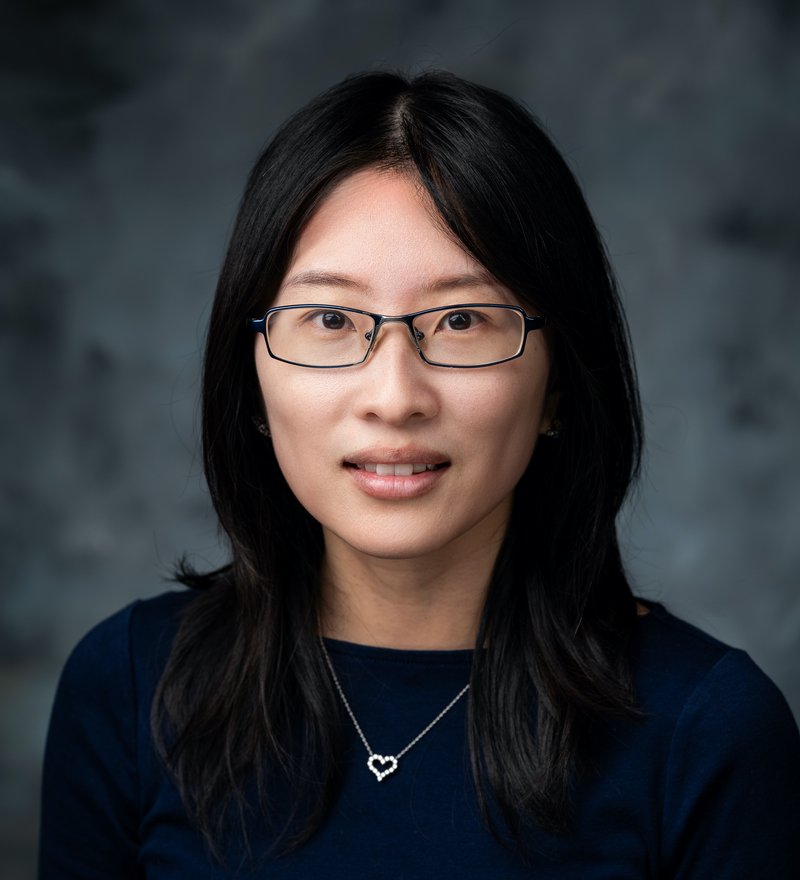
Ruimeng Hu is an Associate Professor in the Department of Mathematics and the Department of Statistics and Applied Probability at the University of California, Santa Barbara. Her research interests include stochastic control, mean-field games, machine learning, and their applications in finance, economics, and multi-agent systems. Before joining UCSB, she was a Term Assistant Professor in the Department of Industrial Engineering and Operations Research at Columbia University. Her research is supported by grants from the National Science Foundation and the Office of Naval Research. She also serves as an Associate Editor for SIAM Journal on Financial Mathematics and Digital Finance.